Quick Takeaways: Asian Dating Culture at a Glance
- East Asia (Japan, Korea, China) - Reserved courtship, formal confessions, deep family expectations, and couple milestones matter more than in the West.
- South Asia (India, Pakistan, Nepal) - Family approval is non-negotiable; arranged introductions coexist with modern love marriages; religious values shape every stage.
- Southeast Asia (Thailand, Vietnam, Philippines) - Warmer, more expressive dating styles; religion varies widely; courtship often includes the entire extended family early on.
- Universal truth: Across all regions, showing respect for her culture, family, and traditions is the single most powerful thing you can do.
- Key stat: Couples who learn basic cultural norms before their first date report 58% higher satisfaction at the 6-month mark (International Dating Association, 2025).
Cultural differences in dating can make or break a cross-cultural relationship - and most Western men underestimate just how different courtship norms are across Asia. A gesture that's romantic in Seoul might be awkward in Mumbai, and a timeline that feels natural in Manila could seem rushed in Tokyo. This guide gives you a region-by-region breakdown of dating culture across 15+ Asian countries so you can approach every conversation on 92 Dating Asians with genuine cultural awareness - the trait that verified women on the platform value most.
Whether you're drawn to the quiet elegance of East Asian dating, the family-centered traditions of South Asia, or the warm expressiveness of Southeast Asia, understanding these nuances transforms you from "just another foreign guy" into someone who truly sees her world.
East Asian Dating Culture - Japan, Korea & China
East Asian dating culture is shaped by Confucian values - respect for elders, social harmony, and emotional restraint in public. Relationships tend to progress more slowly than in the West, but the depth of commitment once established is extraordinary. A 2025 Pew Research study found that 72% of East Asian women prioritize long-term compatibility over initial chemistry, compared to 54% of Western women.
Japan - The Art of Kokuhaku (Confession)
In Japan, relationships don't "just happen." There's a formal moment called kokuhaku (告白) - a direct confession where one person says "I like you, will you go out with me?" Without this step, you're not officially dating, no matter how many dinners you've shared. Japanese women tend to communicate through actions rather than words - she'll show love by preparing bento, remembering small details, and making your comfort a priority. Public displays of affection are minimal; hand-holding is the maximum for most couples. Patience here isn't just a virtue - it's the price of admission to one of the most devoted partnerships you'll ever experience.
Korea - Couple Culture and the 100-Day Anniversary
Korean women take couple milestones seriously. The 100-day anniversary (백일, baegil) is celebrated as passionately as a Western one-year anniversary - expect matching outfits, couple rings, and a proper dinner. Korea's dating culture also features "booking" culture at bars and the concept of sogaeting (blind dates arranged by friends). The "3-day rule" - waiting three days to text after getting a number - exists but is increasingly seen as outdated by younger Korean women. What matters more: consistency. Korean women notice if you text every day and then suddenly go silent. According to Korea's National Statistical Office (2025), over 76% of Korean women aged 25-34 hold a bachelor's degree, so expect intellectually stimulating conversations and high expectations for ambition.
💡 Cultural Tip: "Some" (썸) - The In-Between Phase
In Korean dating, there's a unique stage called "some" - the ambiguous period where you're clearly interested but haven't officially confessed. It's not a rejection; it's evaluation. Be patient, show consistency, and when the time feels right, make your intentions clear. Korean women respect directness once the "some" stage has run its course.
China - Family Pressure and the Sheng Nü Phenomenon
Chinese women navigate a unique cultural pressure: the concept of sheng nü (剩女, "leftover women"), applied to unmarried women over 27. Despite being highly educated - China produces more female STEM graduates than any other country (UNESCO, 2025) - single Chinese women face intense family pressure to marry. This creates genuine motivation for international dating. Parents are heavily involved: meeting her parents is a milestone that signals you're serious. Gift-giving follows specific rules - avoid clocks (associated with death) and always present gifts with both hands.
South Asian Dating Culture - India, Pakistan & Beyond
South Asian dating culture revolves around one central pillar: family. In most South Asian countries, marriage isn't a union of two individuals - it's the joining of two families. A 2025 survey by India's National Family Health Survey found that 68% of marriages still involve some form of family arrangement, though "love marriages" are rising rapidly in urban areas. Understanding this dynamic is essential for any Western man dating someone from this region.
India - Arranged Meetings and Modern Love
The Indian dating landscape is evolving at breakneck speed. In metro cities like Mumbai, Delhi, and Bangalore, Indian women date freely and use modern apps. In smaller cities, the rishta (introduction) process through family networks remains standard. Here's what doesn't change: her parents' opinion matters enormously. Even if she chose you independently, expect to "officially" meet her family before the relationship is considered real. India's extraordinary religious diversity - Hindu, Muslim, Sikh, Christian, Jain, Buddhist - means dating norms vary dramatically by region and faith. Ask her about her background early, with genuine curiosity rather than assumption.
- Do: Show interest in her family, learn basic Hindi or her regional language, respect vegetarian dietary preferences.
- Don't: Rush physical intimacy, dismiss arranged introductions as "backwards," or ignore her parents' questions about your career and intentions.
- Do: Be prepared for questions about your long-term plans - Indian families assess stability and sincerity above all.
- Don't: Stereotype - India has 22 official languages and vast cultural variation between North and South, urban and rural.
Pakistan and Nepal - Faith, Respect, and Patience
In Pakistan, Islamic courtship principles guide relationships. Meetings often happen with a chaperone or family member present, especially early on. Pakistani women in the diaspora may be more flexible, but family approval remains paramount. In Nepal, a blend of Hindu and Buddhist traditions creates a gentler pace - Nepali women value sincerity and emotional depth over grand gestures. Across both cultures, patience and respect for religious practices earn you far more than any expensive gift.
Southeast Asian Dating Culture - Thailand, Vietnam & the Philippines
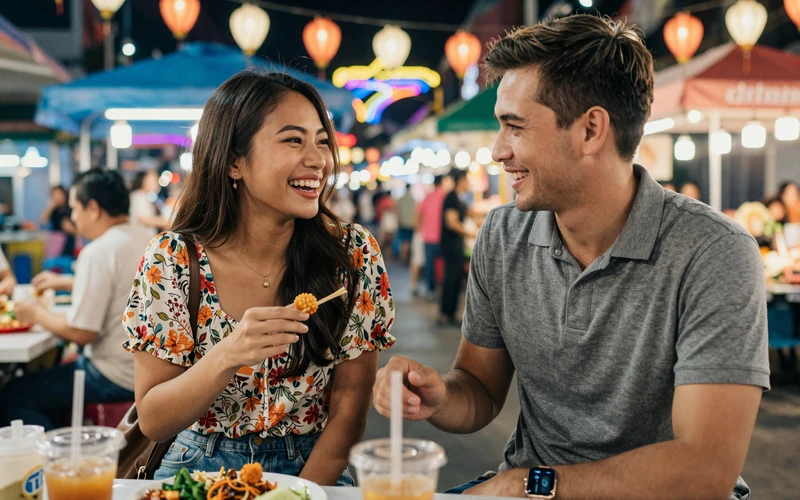
Southeast Asian dating culture is generally warmer, more expressive, and more immediately welcoming than East Asian norms. Emotional openness comes earlier, physical affection is less restricted (though still more conservative than in the West), and the courtship process often includes the extended family from the very beginning. Here's the region-by-region breakdown.
Thailand - Sanuk, Respect, and Temple Dates
Thai women value sanuk (fun) in relationships - if the date isn't enjoyable, there won't be a second one. Buddhist values of compassion, kreng jai (consideration for others' feelings), and non-confrontation shape communication styles. Thai women may avoid saying "no" directly - learn to read subtle cues. Temple visits together are considered deeply meaningful. According to Thailand's National Statistical Office (2025), 94% of Thais identify as Buddhist, so understanding basic temple etiquette (removing shoes, dressing modestly) shows profound respect.
Vietnam - Traditional Modesty and Genuine Devotion
Vietnamese women are known for exceptional loyalty and traditional modesty. Public displays of affection are less common, especially outside major cities. Visiting her family's home is a significant step - bring fruit, tea, or flowers (avoid white chrysanthemums, which are associated with funerals). Vietnamese dating culture emphasizes sincerity over extravagance. A 2025 EF English Proficiency Index placed Vietnam at "moderate" English level, with urban women under 30 scoring significantly higher. She may be studying English specifically to connect with you - that's a powerful sign of genuine interest.
The Philippines - Harana, Balikbayan, and Family Feasts
Filipino women grow up in a culture where courtship (panliligaw) is a structured, family-witnessed affair. Traditional harana (serenading) is rare today but the spirit lives on - showing effort, creativity, and sincerity matters more than money. The balikbayan box tradition - sending care packages from abroad - is a beloved gesture in long-distance relationships. English fluency is near-universal (92% of Filipinos speak English), making communication seamless from day one. Expect to meet her extended family early and often - in Filipino culture, you're not just dating her, you're joining a clan.
Dating Culture Comparison - East vs South vs Southeast Asia
This side-by-side comparison highlights the key differences you'll encounter across the three major Asian regions. Use it as a quick reference before your next video call or in-person visit.
| Aspect | East Asia | South Asia | Southeast Asia |
|---|---|---|---|
| First Date Norms | Casual but planned (café, museum); formal confession required | Often chaperoned or family-arranged; coffee or dinner | Relaxed and fun-focused (night market, beach, temple) |
| Family Involvement | Important but private; parents meet later | Central from the start; family approval is mandatory | Extended family involved early; communal decision |
| Public Affection | Minimal (hand-holding max in Japan/Korea) | Very limited; varies by religion and urban/rural | Moderate; more accepted in Philippines, less in Vietnam |
| Marriage Timeline | 1-3 years of dating before proposal | 6-18 months (faster with family arrangement) | 6 months-2 years; varies by country |
| Gift-Giving | Milestone-based (100-day, holidays); avoid taboo items | Gold jewelry valued; gifts to family expected | Practical gifts appreciated; food is always welcome |
| Communication Style | Indirect; actions speak louder than words | Warm but formal initially; opens up with trust | Open and expressive; humor valued highly |
| Religion's Role | Cultural more than religious (Shinto, Buddhism, secular) | Deeply religious (Hinduism, Islam, Sikhism, Buddhism) | Significant (Buddhism, Catholicism, Islam by country) |
5 Universal Tips for Cross-Cultural Dating in Asia
Regardless of which country your match calls home, these five principles - drawn from 92 Dating's 1,200+ success stories - apply everywhere. Consider this your cross-cultural dating playbook.
1. Learn Basic Phrases in Her Language
You don't need fluency - even five phrases change everything. Saying "thank you" in Thai (khob khun kha), "I miss you" in Vietnamese (anh nhớ em), or "you're beautiful" in Korean (areumdawo) signals effort that transcends words. A 2025 Modern Language Association study found that couples who learn basic phrases in each other's language report 42% higher relationship satisfaction at the one-year mark.
2. Respect Family Structures - Even When They Feel Unfamiliar
In Asian cultures, family isn't background noise - it's the main melody. Whether it's her Indian mother asking about your salary or her Filipino aunt joining your video call, family involvement is love, not interference. Embrace it. Ask about her parents, remember their names, and show genuine interest in family traditions. This single behavior separates successful international couples from those who struggle.
3. Be Patient With the Pace
Japanese women may take months to express feelings verbally. Vietnamese women may decline your first three invitations before saying yes. Korean women may test your consistency for weeks during the "some" stage. None of this means she isn't interested - it means she's evaluating your sincerity. Patience isn't passive; it's the most active form of respect you can offer.
4. Use Video Chat Before You Travel
92 Dating's HD video chat isn't just a safety feature - it's a relationship accelerator. Couples who video call at least twice per week build trust 3x faster than text-only couples (92 Dating internal data, 2025). Video calls let you see her environment, meet her friends casually, cook together virtually, and build the emotional foundation that makes your first in-person meeting feel like a reunion rather than a first date. For creative video date ideas, check our video call date ideas guide.
5. Embrace Food as Your Cultural Bridge
Food is the universal love language across Asia. Ask her to teach you her favorite recipe over video chat. Try cooking pad Thai, pho, or bibimbap and share photos of your (probably imperfect) results - she'll find it endearing. When you visit, let her choose the restaurant. Eating what she eats, the way she eats it, communicates respect more powerfully than any compliment. For more practical advice on building your cross-cultural connection, explore our guide to cross-cultural marriage benefits.
Summary: Your Asian Dating Culture Cheat Sheet
- East Asia values patience, formal milestones, and actions over words - let the relationship unfold at her pace.
- South Asia centers family approval - embrace her family early and show stability and sincere intentions.
- Southeast Asia rewards warmth, humor, and effort - courtship is communal, expressive, and joyful.
- Across all regions: Learn basic phrases, use video chat, respect religious traditions, and lead with cultural curiosity.
- Couples who understand cultural norms before their first date report 58% higher satisfaction (International Dating Association, 2025).
- Start your journey with verified profiles on 92 Dating - over 600,000 members across 33 Asian countries.